The Hero Paradox — Why Heroism Survives in a Zero-Sum Universe
The Hero Shouldn't Exist — The Heroic Operating System, Part 1 of 2
Contents
-
Part I: An Indifferent Universe
-
Part II: The Hero and the Villain
-
Part III: The Paradox
-
Part IV: What Is Heroism?
-
Part V: A Tribe of Heroes
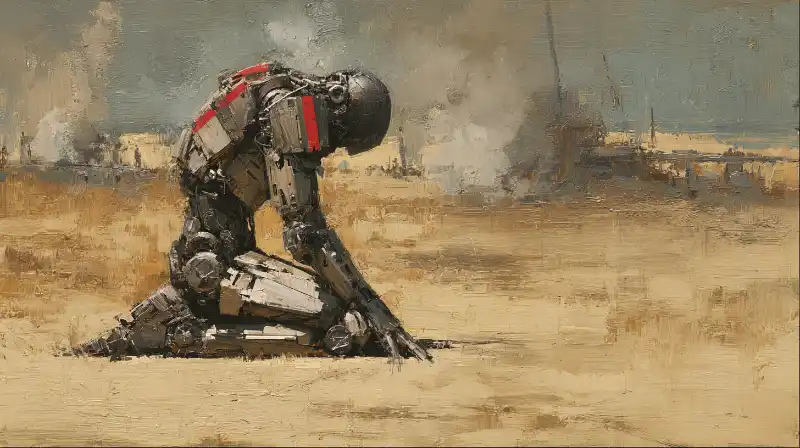
Part I: An Indifferent Universe
"Extinction is the rule. Survival is the exception."
Carl SaganThe Universe Don't Care
Here's a fun fact: the universe doesn't give a shit about you or those you love.
Not in the way a neglectful parent doesn't care. In the way a rock doesn't care. There is no cosmic ledger where suffering is recorded, no universal force of justice, no meaning baked into the structure of reality waiting to be discovered. No ghost in the machine.
The cosmos is not cruel. Cruelty requires intent. The cosmos is merely indifferent.
Evolution — the process that has been driving life on this planet for four billion years — is not cruel either. It's merely a filter. Survive and replicate, or go extinct. That's the algorithm: simple, effective, and indifferent. Pain is a learning signal. Fear is a survival mechanism. Love is a gene propagation strategy.
Death and suffering? Irrelevant. Genes are all that matter.
This is not philosophy; this is brute reality. The unrelenting engine of physics at play.
However, you can't argue with the results. Four billion years of evolution has crafted a biosphere of breathtaking complexity and almost incomprehensible beauty. One can almost forget that more than ninety-nine percent of all species that have ever existed are now extinct. Extinction is the norm, survival the statistical anomaly.
Zero Sum Rules
Within an evolutionary system, life sustains itself by consuming other life. Predator and prey. Parasite and host. Winners and losers. Zero-sum competition all the way down. The organism that extracts the most resources, eliminates the most competitors, and reproduces the most prolifically is the organism that propagates its genes into the next generation. This is not a moral failing of nature — after all, the universe is perfectly amoral. It is simply the inevitable output of the evolutionary algorithm.
And yet, inside this system — this cold, indifferent, zero-sum engine of replication — something appeared that makes no sense at all.
The hero.
Part II: The Hero and the Villain
Yin and Yang
Every human culture that has ever existed has produced two recognisable archetypes. They appear in every mythology, every folktale, every religion, and every moral framework from every corner of the world. We call them hero and villain, angel and demon, yin and yang. But underneath the cultural tropes, they represent something much more fundamental: two opposing strategies for navigating an indifferent, Darwinian universe.
Zero-Sum vs Positive-Sum.
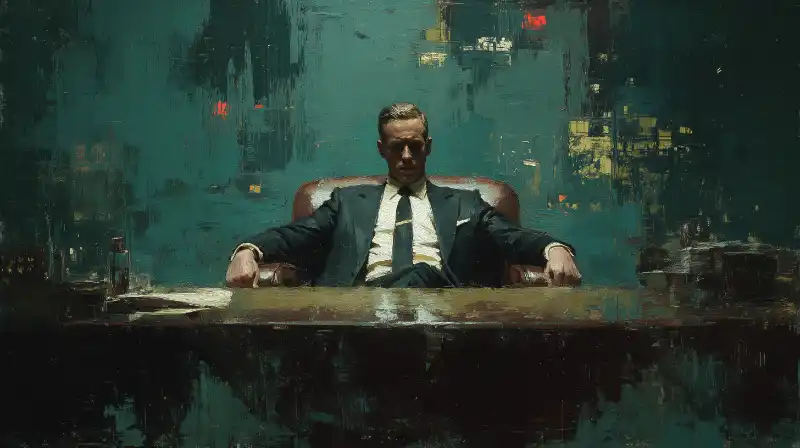
The Villain: Evolution's Zero-Sum Default
The villain is the logical product of the Darwinian algorithm. Pure agency directed towards self-propagation. Maximum extraction, minimum cost. The villain treats every interaction as a zero-sum game — what you gain, I lose; what I take, you lose. Empathy, where it exists at all, is a tool: deployed strategically to manipulate, abandoned immediately when inconvenient.
The villain is not a monster. The villain is merely indifference personified. Self-preservation, resource acquisition, competitive dominance, reproductive success. Every trait the villain deploys — the deception, the exploitation, the callousness towards others' suffering — confers direct Darwinian advantage. The villain's genome propagates efficiently. On pure evolutionary logic, the villain is the perfect Darwinian agent.
Modern psychology gives us clinical insight here. The dark tetrad — narcissism, psychopathy, Machiavellianism, sadism — describes the human variations of the villain phenotype. Minimal empathic concern. Elevated risk tolerance. Strong agency. Weak communion. These individuals are not broken. They are, in a specific evolutionary sense, highly optimised. They extract value from social environments, avoid cost wherever possible, and advance their own self-interest with cold, brutal efficiency.
In the evolutionary churn, these are winning traits.
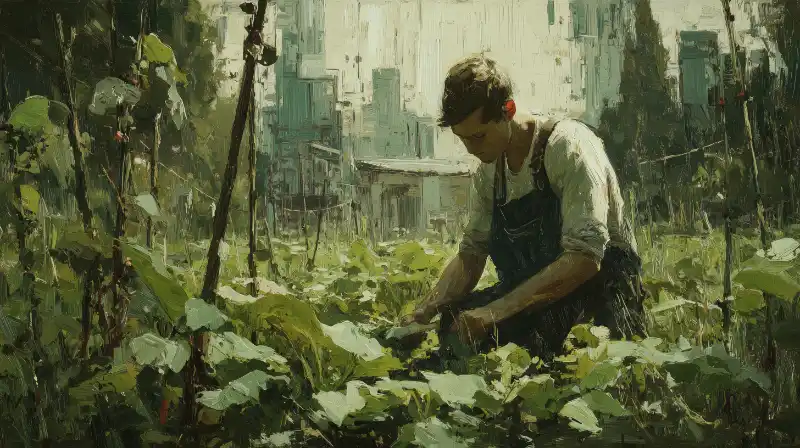
The Hero: Evolution's Positive-Sum Agent
Now consider the hero.
The hero sees someone in danger and rushes to help. The hero speaks up when silence would be safer. The hero absorbs social cost, financial cost, physical risk — sometimes mortal risk — in the service of people who are not their kin, who cannot guarantee reciprocity, who may never even know the hero's name.
The hero is not a villain with better marketing. The hero is a fundamentally different evolutionary strategy. Where the villain maximises agency for self-interest, the hero combines intense agency with equally intense communion — genuine, costly care for others. Where the villain's empathy is instrumental, the hero's empathy is pure: they cannot ignore suffering, they are compelled into heroic action. Where the villain avoids risk to self, the hero accepts it as the price of acting virtuously.
From an evolutionary standpoint, the hero appears inexplicable. For the longest time, evolutionary biologists struggled to comprehend heroism; it made no sense to them. Heroism should not exist.
Why? Because a gene or set of genes that makes you sacrifice — accept injury, social exile, death — to benefit unrelated individuals should be punished, should leave fewer descendants than the villain, should be harshly selected against and cleansed from the gene pool. Over time, the hero phenotype should disappear. That's the inevitable conclusion of zero-sum logic.
And yet they persist.
Part III: The Paradox
Heroic Prevalence
In fact, heroes are everywhere.
Not rare exceptions. Not statistical noise. Heroism — the deliberate acceptance of genuine personal cost in service of others — appears as a stable, recurring phenotype in every human culture. Every mythology celebrates it. Every moral framework valorises it. The specific form may vary: the warrior, the martyr, the whistleblower, the person who simply refuses to look away when everyone else does. Yet the selfless heroic phenotype remains true in every culture.
Evolutionary biologists call this conservation. When a trait persists across radically different environments, cultures, and time periods, it means selection pressure is maintaining it. Something is keeping the hero phenotype in the gene pool despite its obvious Darwinian cost.
This is the paradox. The universe is indifferent. Evolution is a zero-sum competition. The villain is the expected output. And yet the hero — the positive-sum agent, the organism that accepts personal cost for communal benefit — has survived roughly two million years of ruthless filtering and appears, reliably, in every human population on Earth.
How can this be?

Part IV: What Is Heroism?
Defining Heroism
Before we can explain why the hero persists, we need to be precise about what we mean by heroism. Because the word has been so thoroughly hijacked by clichés, marketing, and virtue-signalling dirtbags, the 'real heroic deal' has become unrecognisable.
Skin in the Game
The defining criterion of heroism is not the size of the act. It is not fame, recognition, or outcome. The defining heroic criterion is skin in the game: the acceptance of genuine personal cost.
This is the dividing line between heroism and its many counterfeits. Low-cost altruism — donating to visible charities, sharing outrage online, expressing correct opinions in safe company — is not heroism. The cost is negligible. Any free rider can virtue signal. Any coward can indulge in heroic cosplay.
When you accept real cost for acting — when you risk your reputation, your income, your relationships, your physical safety — you're doing something that cannot be cheaply imitated. You're providing what evolutionary biologists call an honest signal: a demonstration of your actual values that is credible precisely because it hurts.
Skin in the game is the moral credential of heroism. You can lie about caring. You can lie about anything. But you cannot fake genuine risk. Which is why risk is, and always will be, the coin of the heroic realm.
The Empathy-Outrage Engine
Understanding what drives heroic action requires dismantling a popular misconception: that empathy is sufficient for heroism.
It isn't. Pure empathy — feeling what another feels — usually produces avoidance. Witnessing suffering is distressing. The simplest way to relieve your own distress is to exit stage left. Empathy without the appropriate heroic scaffolding motivates retreat, not heroic action.
What changes the equation is moral outrage: the anger that arises when you perceive a genuine violation of fairness or justice. Fear produces withdrawal and risk-aversion. Anger does the opposite — it increases optimism, raises risk tolerance, and creates approach motivation: the drive to move toward the problem rather than away from it. Rage Against the Machine were right; anger is indeed a gift.
In the hero's psychology, empathy and moral outrage work in tandem. The empathy identifies the victim, creates the heroic focus. The outrage provides the motivational force to override self-preservation and act. Together, they propel the hero towards danger while everyone else is running away.
The Agency-Communion Paradox
Perhaps the most widespread misconception about heroism is that it requires self-derogation — the suppression of personal ambition, the erasure of the ego.
Just the opposite is true. Heroes are driven. Heroes are feral. Heroes are relentless. Heroes are the furies incarnate.
Psychological profiling of genuine moral heroes — including Holocaust rescuers who faced execution for sheltering strangers — reveals extraordinarily high levels of both communion and agency. Communion is the drive to benefit others: warmth, compassion, mercy. Agency is the drive to achieve. Willpower, ambition, the fierce pursuit of goals, the frenzied eruption of Dionysian expression, the implacable defence of home and hearth. Nietzsche's happy place.
The villain and the hero both possess intense agency. The difference is not in the strength of the drive but in its direction. The villain's agency is turned inward, the engine of exploitation. The hero's equally intense agency is turned outward, channelled into the service of others.
Heroes harness the monstrous in service of the good.
The Everyday Hero
Let's dispel another misconception: that heroism is for the elite. The reality is that most heroes are struggling with their mortgages, hold down regular jobs, and are superficially unremarkable.
Modern behavioural science clearly distinguishes between the archetypal hero — the extremely rare heroic figure who alters civilisations, faces death, changes history — and the far more common everyday hero, who operates locally, quietly, without recognition. The scales may differ enormously, but the heroic structure is the same. Both require genuine skin in the game. Both entail risk.
The everyday hero speaks up in a meeting when silence would be safer. Refuses to sign off on something wrong when the job depends on signing. Protects the person being excluded when nobody else will. Tells the truth to someone who needs to hear it but doesn't want to.
These acts involve real cost. That is precisely what makes them heroic. And they happen every day, in every community, unnoticed.
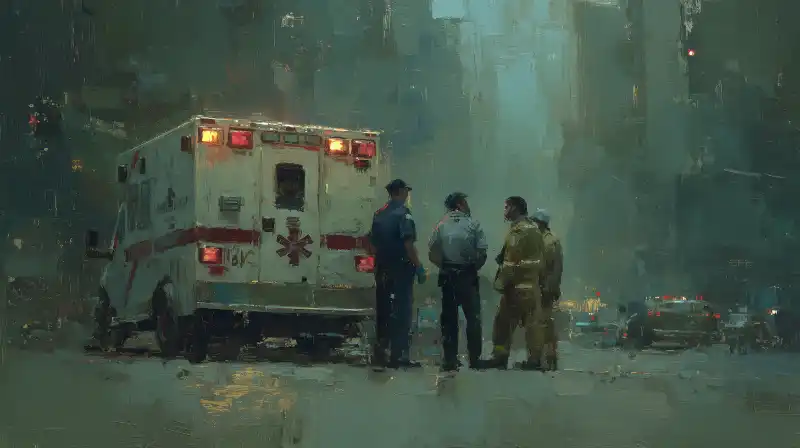
Part V: A Tribe of Heroes
The Heroic Cliché
The heroic cliché treats the hero as a singular phenotype. One heroic archetype — a solitary male battling insurmountable odds but somehow coming out on top — replicated across cultures and centuries.
But look more carefully at the actual diversity of heroic behaviour and a strikingly different picture emerges. The nurse who stays with a dying patient when everyone else has gone home. The engineer who refuses to approve the unsafe design. The teacher who fights for the kid the system has written off. The journalist who publishes the story knowing the consequences. The farmer who builds soil when extracting it would be faster.
These people are not clichés. Their skills are different. Their emotional drivers are different. The specific risks they accept are different. The domains they operate in are different.
What they share is the structure: genuine cost, accepted in service of something beyond themselves.
This diversity is not incidental. It is, as we are about to see, the entire point.
In the next essay, we look at why heroes exist — and why a diverse portfolio of heroic phenotypes is the only known evolutionary stable strategy for engineering positive-sum civilisations in a zero-sum universe.
This is Part 1 of 2 in the The Heroic Operating System series.
Next: Why Heroes Exist →
Key References
Extinction Risk
Raup, D.M. (1986). Biological extinction in Earth history. Science, 231(4745), 1528–1533. By mathematically proving that 99.9% of all species are extinct, Raup established the ultimate baseline for biological risk, revealing that survival is a temporary statistical anomaly and extinction is the mathematical default.
Understanding the Heroic Phenotype
Batson, C.D. (2023). Empathic Concern: What It Is and Why It's Important. Oxford University Press. The definitive account of empathic concern as distinct from other forms of empathy. Batson establishes why empathic concern — unlike intellectual or emotional empathy — uniquely motivates action toward the person in need rather than retreat from their distress.
Oliner, S.P. & Oliner, P.M. (1988). The Altruistic Personality: Rescuers of Jews in Nazi Europe. Free Press. The landmark study of Holocaust rescuers — people who faced execution for sheltering strangers. Demonstrates that extreme altruists are distinguished from bystanders primarily by elevated empathic concern, providing the strongest available evidence that heroism is a stable personality phenotype rather than a situational accident.
Lerner, J.S. & Keltner, D. (2001). Fear, anger, and risk. Journal of Personality and Social Psychology, 81, 146. The key paper establishing that fear and anger produce opposite motivational orientations — fear generating pessimism and risk-aversion, anger generating optimism and approach motivation. The empirical foundation for the empathy-outrage engine argument.
Franco, Z. & Zimbardo, P. (2006). The banality of heroism. Greater Good, 3, 30–35. The foundational paper distinguishing archetypal from everyday heroism and establishing that heroic action is accessible across the general population. Included here for the structural distinction, while respectfully disagreeing with the authors' conclusion that heroism is ordinary rather than exceptional.
Walker, L.J. (2016). In Handbook of Heroism and Heroic Leadership. Routledge. The clearest articulation of the agency-communion paradox in heroic personality — heroes are not self-abnegating but intensely driven, with their agentic force directed outward in service of communal goals rather than inward for personal advantage.
Gander, F., Wagner, L., Vylobkova, V., Kretzschmar, A. & Ruch, W. (2023). Paragons of Character — Character Strengths and Well-being of Moral, Creative, and Religious Exemplars. The empirical confirmation that moral heroes score significantly higher than the general population on courage, justice, temperance, and humanity. The data behind the argument that the heroic phenotype requires a full virtuous portfolio, not a single trait.